

Light Pollution: Types, Causes, Effects, And Solutions
With the inventions of electricity and artificial lighting, humans could win over the dark nights and make them productive. Just like other human inventions that are a big contributor to climate change and plastic pollution. The artificial lights are also causing problems in our environment and ecosystem in form of light pollution. Many children around the globe are growing up without being able to enjoy the stars in the dark sky.
What is Light Pollution?
You might know about other forms of pollution, but light pollution could be the new thing that you just heard. Let me try to explain this to you.
Light pollution is basically caused by inappropriate, misdirected, and excessive use of artificial outdoor lights. Excessive lighting during night blocks the view of stars, increases energy consumption, disrupts ecosystems, and has detrimental effects on both humans, plants, and wildlife.
Let’s now talk about different types of light pollution.
Types Of Light Pollution
There are many types of light pollution, but it can be roughly divided into five types for better categorization as discussed below.
#1. Over Lighting
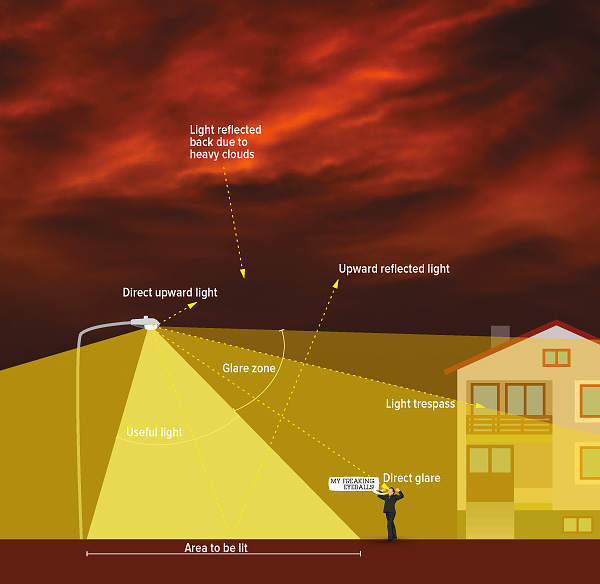
Over-lighting, is also known as Over-illumination, is mainly caused by misuse or overuse of lighting. This can occur when lights are not turned off when not in use or use of improper lighting, which is not directed into the area of use. Using lights during the daytime by businesses to attract customers also contributes to over-lighting or over-illumination.
#2. Glare
Glare is basically an excessive brightness that can cause visual discomfort. It can also be caused because of light getting reflected from the surface and causing vision problems. A light glare can make it difficult for you to identify objects and places.
#3. Skyglow
Skyglow is a type of light pollution that is referred to as the brightening of the night sky over inhabited areas. This is mostly the light that is escaping from the street lights or buildings and goes up into the atmosphere and bounces back from the atmosphere. Essentially, making a dome-like cover of light over the city areas.
#4. Light Trespass
Light trespass is light pollution caused by light falling on the areas where it is not needed. It is simply the unwanted light entering someone’s property. This could be the light from the street light coming directly into your bedroom.
#5. Light Clutter
Light clutter, as the name suggests is the light pollution caused by a bright, confusing, and excessive grouping of many light sources. This can be caused by a cluster of many business signboards, and street lights that interfere with night vision.
Causes Of Light Pollution
Now it’s time to move on to understand the different causes or reasons for increased light pollution.
All the causes of light pollution are purely man-made. Here are the top 7 reasons for increasing night pollution.
#1. Poor Planning & Use
The street lights and advertisement signages are installed without proper planning or understanding their effects on surrounding areas. The street lights are set up without proper timers to turn them off during the daytime. These unplanned light placements can cause glare, light trespassing, and light clutters.
#2. Excessive Use Of Lights
Another major reason for increased light pollution is the excessive use of electric lights. As electricity has become cheaper over time, people are using excessive lights without caring about electricity consumption. This excessive use of electricity results in more fossil fuels being burnt for electricity production, which is a major reason behind climate change. Cheaper electricity has also resulted in excessive lights being left on during the night, causing light pollution. Some lights are left in for the entire night for security purposes or for aesthetics and end up causing a lot of light pollution.
#3. Night Sports Stadiums
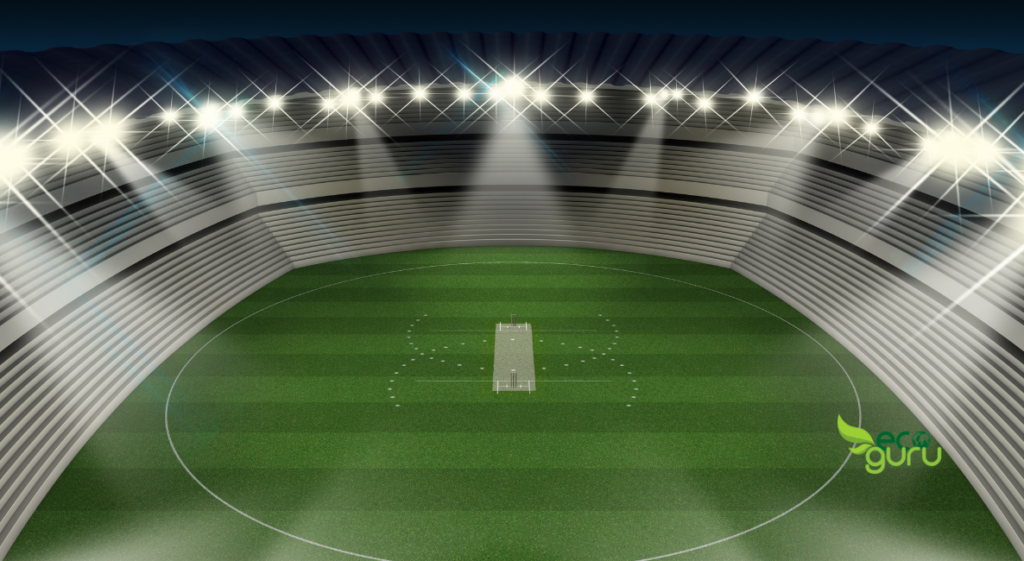
The floodlights used in stadiums to organize major sports events are highly powerful. They do serve their purpose to lighten up the stadium but also disturb nature by brightening the night skies. These big lights are a big contributor to the light pollution caused around the stadium skies. With lots of money being pumped into sports the frequency of such events has increased resulting in increased light pollution.
#4. Lights From Cars & Other Vehicles
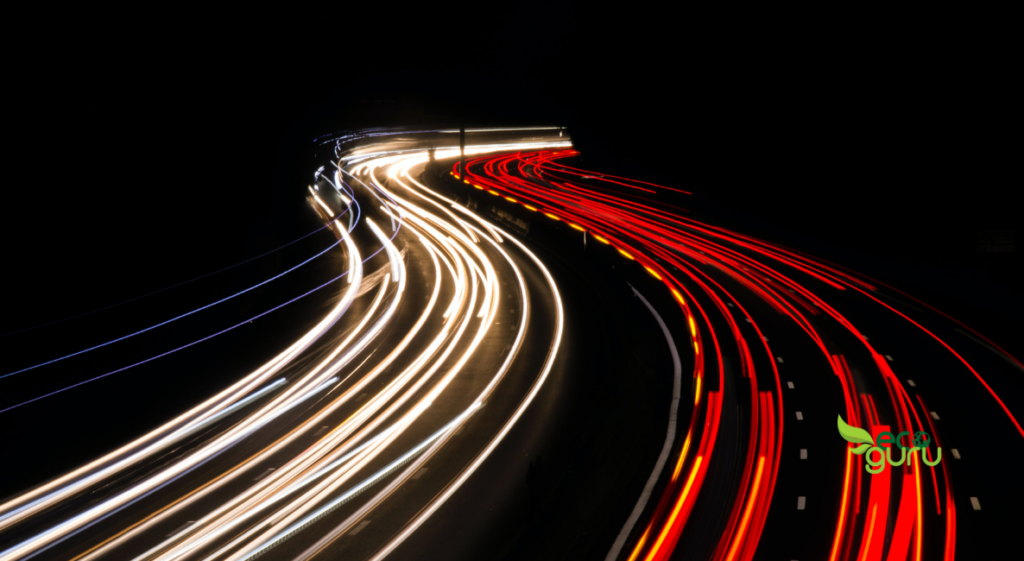
Cars and other vehicle lights contribute a big time to light pollution, especially at night. This problem is more severe in major cities where vehicles keep on running all night long. When vehicular lights get combined with bright roadway lights, it becomes far worse. This makes the sleep of people living near high-traffic areas quite difficult.
#5. Business Advertisements
On highways and in major cities, it is a common sight to find large business advertisements on a well-lit billboards and electronic displays. These billboards and displays have quite powerful lights that often spread around and get reflected in the skies. These lights cause lots of light pollution since lights are spread out carelessly.
#6. Dense Population
With urbanization, the population densities have increased in particular areas, resulting in too many residential areas and businesses in a few kilometers. These high-density areas emit a lot of light at night and contribute to light pollution in a big way.
#7. Public Centres
Public centers like city parks, airports, and bus and train stations often use powerful lightings that go high up in the skies and trespass unintended surroundings. These public centers are among the top contributors to light pollution.
How Bad is Light Pollution?
If you want to know how bad is the light pollution just go out at night and look up to the sky, especially if you live in urban or suburban areas. A major part of the earth’s population is living under light-polluted skies.
The study “World Atlas of Artificial Night Sky Brightness” published by a science journal shows that 80% of the world’s population lives under light-polluted skies. With United States and Europe facing the worse with 99% of the population unable to experience the natural night.
You can understand the different forms this image published on the dark sky website shows the clear difference in the night sky view before and after a blackout.
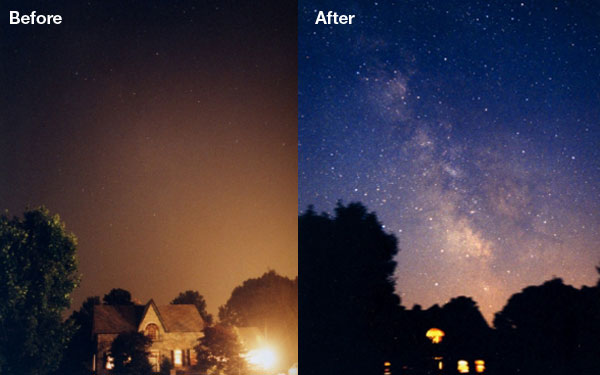
source https://www.darksky.org/light-pollution/If you want to find out more about the extent of the light pollution, you can visit this interactive map created using the above-mentioned study. Or check the NASA Blue Marble Navigator showing the view of the lights that are on during the nighttime.
Read on to understand the effects of light pollution.
Effects Of Light Pollution
Artificial lights have disturbed the natural balance of day and night. Now that our cities glow at night with high-power artificial lights. The balance of our environment has been disturbed, which is having many negative effects. The negative effects of light pollution can include the following:
#1. Increased Carbon Emissions & Pollution
Light pollution wastes incredible amounts of natural resources in form of fuel & coal burnt to produce electricity. Even with the introduction of renewable energy sources, lots of energy is being produced using fossil fuels. That means excessive use of lights is not only causing light pollution but also resulting in increased greenhouse gases.
Lights that emit too much light that shines on places where it is not needed are wasteful. This wasted energy has both economic and environmental negative effects.
#2. Harms Wildlife & Ecosystem
For billions of years, animals and plants have been dependent on the daily cycle of day and night to perform their activities. They depend on day and night rhythm for reproduction, nourishment, sleep, and sustaining life. Studies suggest that artificial lights during the night have deadly effects on all sorts of creatures, be it birds, mammals, insects, or plants.
Light pollution harms the life of nocturnal wildlife who depend on the dark to survive. Many animals like sea turtles and birds who depend on moonlight for migration get confused, lose their way, and often end up dead.
Light pollution affects many aspects of animal life, from migration patterns to wake-sleep habits, and habitat formation.
#3. Cause Serious Health Issues
This study links light pollution with many serious health ailments and decreased quality of life. Exposure to too much light can disturb the natural circadian cycle, the biological clock of sleeping and wake up. This can cause serious health effects that can cause cancer, cardiovascular diseases, depression, and insomnia.
Humans have evolved for billions of years with the natural light-dark cycle of day and night. With the overuse of artificial lights, no one experience a truly dark night. This has disturbed our biological clock of sleep and waking up and the body stops producing melatonin. Melatonin helps to fall asleep and its other properties help boost the immune system while helping the body function better.
#4. Blocks The View Of Night Sky
Light pollution has destroyed the view of the stars that humans have been enjoying since the beginning of time. Most of the children growing up nowadays have never experienced the night sky like we did while sleeping out there in open. Humans have always looked up to the stars for traveling or to help them understand their surroundings better.
There is no place left where you can sit back and enjoy the night sky without any trouble. But associations like International Dark Sky Association (IDA) are working on preserving the night skies. They are working on establishing many dark sky reserves to help preserve the night sky.
We need our dark skies back and the ability to enjoy the stars and rejoice in the view of the night sky.
Solution To Light Pollution
Every problem must have solutions or a way to reduce the effects or troubles being caused.
So, here you can find out the most possible solutions to the menace of light pollution.
#1. Choosing The Right Kind Of Bulbs
When selecting the bulb, use the one with lower color temperature light sources for both interior and exterior use. Prefer warm white light over white as they have a lower color temperature. The lights with temperatures lower than 3000K on Kelvin Temperature Scale are estimated to reduce light pollution by 2.5 times.
#2. Light Shields
Using light shields can help prevents the light from trespassing to areas where it is not needed. Instead, help concentrate it on the area where required. This helps in reducing the negative consequences like light escaping to nearby areas or into the night sky.
#3. Using Motion Sensors
Motion sensors help to reduce light pollution by only turning on the lights when the motion sensor gets triggered. This way, the light gets turned on only when it detects the motion. This ends up saving lots of energy and significantly reducing light pollution.
#4. Turn Off the Lights
Only use the lights when needed and turn them off when not in use. Using the lights only when and where required can help significantly reduce light pollution. Turning it off will not only help you save energy but also help reduce light pollution.
#5. Use The Curtains
When using the light indoors, keep the curtain drawn to keep the light inside. This might not have a tremendous impact but it is surely going to reduce light pollution.
#6. Create Awareness
Creating awareness amongst your peers and society can be critical in reducing light pollution. Educating people about the effects of light pollution can encourage enough people to act and help reduce light pollution. You can get started with creating awareness by sharing this blog post with your friends and family.
Wrapping Up
Light pollution is a major problem in our society although it might not seem anything in comparison to global warming. But it has many detrimental effects on the environment and wildlife. Reduction in light pollution also helps reduce carbon emissions as less energy is consumed.
The problem of light pollution can easily be dealt with by taking simple measures like selecting the right kind of lights and turning off lights when not in use.


Comments
1 Comment
[…] Light pollution is becoming the next biggest threat to our environment. The excessive outdoor lighting can turn the night into day, thus disturbing the ecological balance of wildlife. Excessive use of lighting means more coal is being burned to produce electricity. The light pollution has acted as a hindrance to the view of the night sky. […]
Comments for this post are closed.