
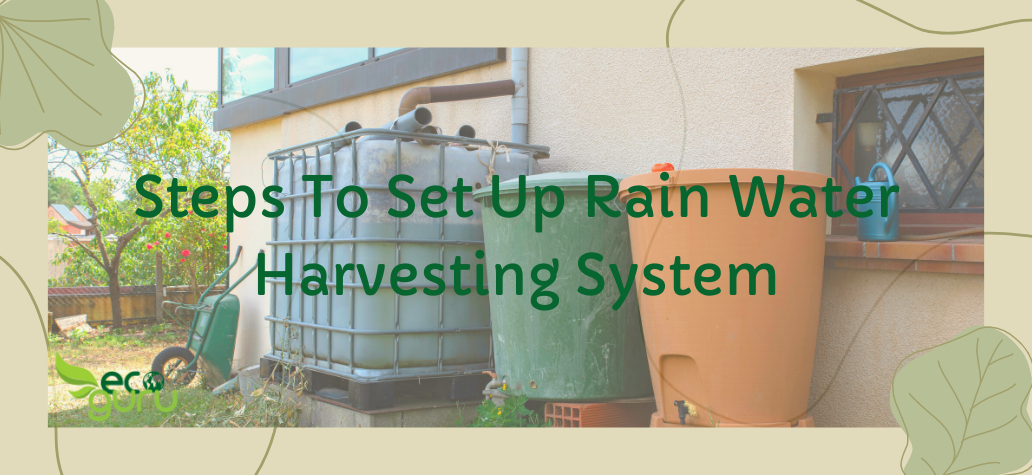

6 Easy Steps To Set Up Rain Water Harvesting System
Rain water harvesting systems work on the collection and storage of rainwater instead of letting it runoff. Using these systems, you can collect runoff water from rooftops, parks, roads, or grounds. You can then purify the collected water and store it for later use or use it to recharge groundwater reserves.
What to know more about rain water harvesting systems? Visit here to learn all about the rainwater harvesting system.
If you want to understand how to set up a rain water harvesting system read on. You are at the right place to develop an understanding about how to set up rain water harvesting system.
To set up rain water harvesting system you need to first understand all the components of the rainwater harvesting system. Then design a system using these components.
Components Of Rainwater Harvesting System
To figure out how to set up rain water harvesting system, understand the six key components of rainwater harvesting system as listed below
- Catchments
- Conduit
- First Flush
- Filter
- Storage Tanks
- Recharge Structures
Catchments
The catchment is the open surface or area that receives the rainfall directly. It could be a terrace, courtyard, park, or playground.
The catchment is the first component in the whole system to set up rain water harvesting system. As the entire process starts with catching the rain water as it falls.
Conduit
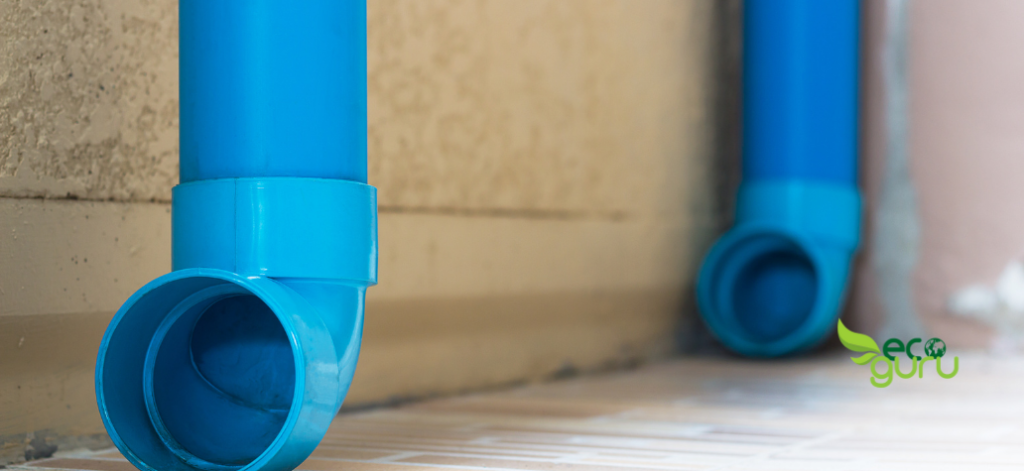
After catching rainwater, it needs to be transported for storage or groundwater recharge. Water pipes, also known as conduits, are used for transportation of rainwater. Water from sloppy roofs is often caught using the gutters and downpipes. For water transportation from terraces, each mouth of the drainpipe has a wire mesh to restrict any solid material from getting into drains.
First Flush
The first flush is a device used to flush off the water collected in the first shower. You need first flush to avoid contamination of storable or rechargeable water.
This process helps in getting rid of materials that get deposited on the roof in dry seasons. You should make the first flush attachment to each drainpipe outlet for significant results.
The first flush can be an optional component when you set up rain water harvesting system. As it all depends on your end-use. If you are going to use the harvested water for watering plants you can avoid using first flush.
Filter
The filters are useful for the treatment of water before it is stored or sent for groundwater recharge. These filters can effectively remove turbidity, colour, and microorganisms from the collected water.
After the first flush, the rain water passes through filters. A gravel, sand, and netlon mesh filter is placed on the top of the storage tank. This filter removes silt, dust, leaves, and other organic materials. It is very helpful in keeping the rainwater storage tank clean.
You need to clean the filter from time to time to make the flow of water into the storage tank easy and avoid over flowing. You can simply take out the sand and gravel material and wash it out and place it back in the filter.
Storage Tanks
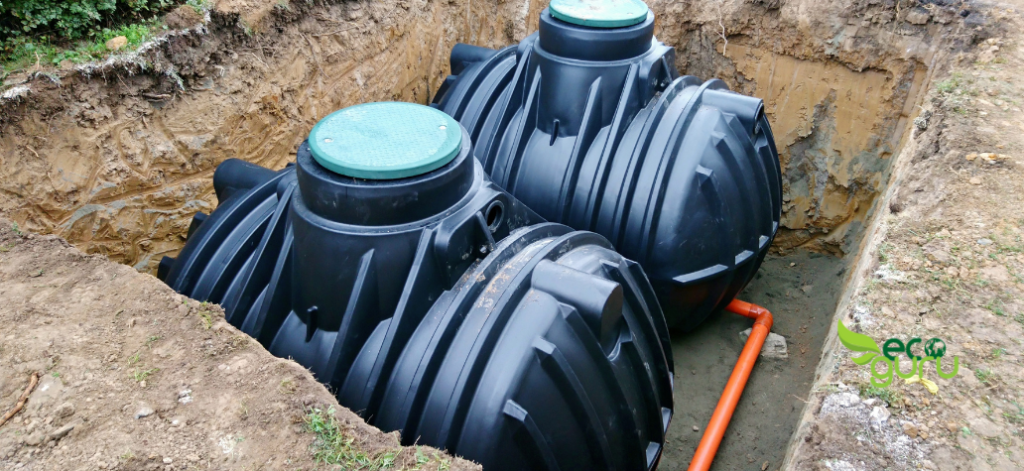
After rain water is collected and filtered, we store it in storage tanks for later use or groundwater recharge. You can construct the storage containers using concrete or use plastic tanks. You can do the construction of the tanks above ground or underground depending on the space available.
You need to do the regular maintenance of tanks like disinfection and cleaning to maintain the quality of water stored in tanks.
Recharge Structures
The harvested rain water can also be used for recharging the groundwater deposits using suitable recharge structures. The ground water recharge structures could be borewells, recharge trenches, or recharge pits.
There can be different kinds of recharge structures depending on the depths they can take the water. The recharge structures, like recharge trenches, permeable pavements take water to shallower depths. Others, like recharge wells, tube wells take water deeper into the ground.
The existing structures, like wells, abandoned tube wells, can also be modified and used as recharge structures and eliminate the need to construct new structures.
Now that you understand all about the components of the rainwater harvesting system, let’s get started with understanding various steps to set up rain water harvesting system.
Steps To Set Up Rain Water Harvesting System
You can divide the process to set up rain water harvesting system into roughly six steps as discussed below
Step 1: Understand the rainwater harvesting potential
Step 2: Plan out the layout for the various components
Step 3: Setup the storage units
Step 4: Finalise the features of your system
Step 5: Install pipes and tanks
Step 6: Test your rain water harvesting system
Step 1: Understand The Rainwater Harvesting Potential
You need to first understand the rainwater harvesting potential of your area to get started. The rainwater harvesting potential is the amount of rainfall that you can collect in a particular area.
You need to first measure the surface area of your catchment surface, be it rooftop or the open ground. You would also need the data for average rainfall in your area. That you can find on weather forecast sites or on your local municipality website.
Then, to calculate the rainwater harvesting potential, multiply the surface area available to collect rainwater with average annual rainfall.
The Rainwater Harvesting Potential = Surface Area Available To Collect Rainwater X Average Annual Rainfall
Let’s take an example to better understand calculating rainwater harvesting potential.
Let’s assume that your catchment area is 100 m2 and the average annual rainfall in your area is 1000 mm.
That would mean you would harvest a volume of 100 m3 of rain water every year. You would need to install components according to the water you need to collect and utilize over the entire year.
Step 2: Plan Out The Layout For The Various Components
To set up rain water harvesting system now, you need to plan out the layouts for various components of your rain water harvesting system. You need to decide the location of different components like storage tanks to help maximize the use of catchment areas.
There are several options to plan out the location of storage containers. You can either spread out storage tanks throughout your premises or cluster them at one place.
When you spread out tanks throughout the house, you would need to do minimum digging to add pipelines, but your tanks would be located at different locations & heights. If you decide to go for clustered tanks, you would need to do a lot of digging but all your tanks would be in a single place. Using cluster tanks will also have a minimum visual impact on your property.
Whatever to decide, make sure to plan out everything from pipelines to the position of tanks for storage.
Step 3: Setup The Storage Units
After you collect the rain water, you need to divert the rain water into the storage tanks. The storage tanks need to build as per your water requirement, predicted average rainfall, and catchment facilities.
You need to decide whether to build them underground or overground. After deciding this, you need to set up these storage tanks as planned.
You also need to set up overflow water management systems that could essentially divert the excess water for ground water recharge purpose.
Step 4: Finalise The Features Of Your System
Next up, you need to finalize all the features of your rain harvesting system that will help you limit water contamination.
- Finalise on the kind of first flush devices you need to use with your system. The first flush devices are used to flush off the first showers of rain to avoid water contamination. It helps in getting rid of silt and other material deposited over the roof in dry season.
- Set up rain water harvesting system with use of filters before water enters the storage tanks. This ensures that no silt, dust, leaves or any other organic matter is entering the storage tank.
- Any additional feature you want to have in your rain harvesting system. The additional features could include following.
- UV water filter for drinking water.
- Pumped water distribution.
- Ground water recharge facilities.
- Automated irrigation systems.
- Ability to empty each tank separately for cleaning.
Step 5: Install Pipes And Tanks
Now that you have finalized every aspect of your rain water harvesting system setup. You now need to fit in pipes and tanks as per the plan. Make sure to take the required permissions from the local municipality to complete the entire set up.
Step 6: Test Your Rain Water Harvesting System
Make sure that everything is properly installed and there are no leakages in the entire pipeline. You can put some water in your catchment area and check for whether it is reaching the tanks.
With this, you are done with set up of rain water harvesting system.
Visit here to read more about rain harvesting systems and here to know more about water conservation methods.
Also, visit here for a list of eco-friendly products for you to help you reduce your carbon footprint.


Comments
2 Comments
[…] 6 Easy Steps To Set Up Rain Water Harvesting System […]
[…] Also, read about different water conservation methods, Detailed account of rainwater harvesting system, and Processes of setting up a rainwater harvesting system. […]
Comments for this post are closed.